Saturday, August 26, 2023

The New Foldable Winner: Honor Magic V2


Samsung seems to be reassured about its position in the foldable phone market and its laziness in developing designs and improving performance over the past two years, with Galaxy Fold 3 & 4, and 5, opened the way for many companies, such as Huawei, Oppo, Google and OnePlus, and allowed them to develop phones that are superior to Samsung devices. They offers better features, with foldable screens that are more vivid and flexible, as well as specifications that include batteries that last for longer periods, thinner body, and better dimensions, whether with regard to using the phone closed or when opening it and using it as a large tablet.

The latest Samsung device in this category, Galaxy Fold 5, is largely similar to its predecessors, except for what is related to the processor (Snapdragon 8 Gen 2) and the hinge that connects the two components of the phone, and reduces the crease in the middle of the large screen when opening the smartphone... The biggest problem is that the price will remain high.

The only feature that separated the South Korean company's product from the rest of the is the presence of the electronic pen (S Pen), which allows the user to write and draw, taking advantage of the dimensions of the large screen.

Meanwhile, what can be described as the strongest competitor to Samsung has emerged from the Chinese company Honor, which until recently was part of Huawei. A foldable phone that is currently on the market (9.9mm thin when closed, and 4.75mm when opened), in addition to that, it will be equipped with a larger battery than that of Samsung Fold phones; the Honor battery reaches 5000mAh, and it will work on the same processor (Snapdragon 8 Gen 2), in addition to an external screen similar to a normal mobile phone screen measuring 6.43 inches, unlike the long screen of the Samsung Fold.

The fatal blow came with the provision of the new Honor device with an electronic pen, as it can be used with both screens, external and internal, for writing and drawing.

The phone was launched in the Chinese market recently, and now after its IFA moment, everyone is waiting for it to be launched in the world, especially if the price will be better than that of the Galaxy device.


Has Samsung already lost the race?

Sunday, June 4, 2023

What did Technology bring to us all?


Do you remember the professional freelance photographer that used to rove beaches and resorts, offering his services to beautiful ladies and families, for a certain not-so-high fee? Do you remember how people were posing according to the photographer’s indications and instructions, and how they were eagerly waiting to receive their photographs after development? What happened to that kind of experience?

Well, what happened was that the job of the photographer was simply eliminated, fewer people seek professional photographers now, except when it concerns high level occasions; weddings, important receptions, political or economic events, or the like. Now, everyone is a photographer, with their smartphones, they are just pointing and shooting, disregarding the quality of the final shots or the skillful application of light and shadow effects, not to mention that if you know someone familiar with Photoshop, you can remove any unwanted features that, magically, appeared in your photograph, because you did not take care of many elements; such as the background, the position of the sun, that trash on the sand, or the direction of the wind.

The same applies to many other professions. They sank in the moving sands of technology.
It is essential to state that the great advances of science and its applications in what concerns devices and tools became an important part of all our lives. Communications became so easy and accessible that you can practically get in touch with anyone anywhere around the world in a matter of seconds. Remember how difficult it used to be to find a public phone booth during emergencies? And do you remember that if the person you are trying to call was not home at the moment of the phone call or even in another room, you might not be able to talk to them at all?

You can read any book in any language the moment it is published, you can listen to music without carrying around a box full of tapes or CDs. And you can watch a movie or a TV series on TV, PC, tablet or smartphone, regardless of where you are located in the world.

However, it is important to discuss the other side of the coin, technology was the reason for many problems related to security, free speech, jobs, and more.

Everyone became an expert photographer who knows everything there is about the art of photography, the moment he/she bought the latest iPhone or Galaxy device.

No one needs to go to university to study history or literary styles, or the basic ethics of storytelling; they do not need to know about the difference between writing news for print, radio, or TV. They just create a blog or open an account on Facebook and start writing, stating that they are Journalists; experts in their fields.
Suddenly, everyone is an expert in politics, economy, medicine, technology, investments, and the deepest and most important questions of our existence.

This has led to a situation where many people get their health advices from self-proclaimed medical experts instead of turning to real medical doctors; many are taking their essential directives concerning their mental status from literal charlatans who have an attractive website and some agents promoting them on social media; many take their daily dose of news and information from sources that the least we can describe them with is untruthful or misleading; and many children or teenagers are being deceived and harmed by criminals and predators posing as online friends and helpers, or by dragging them into extreme political or criminal groups.

Not everyone is an expert; this is a fact. But technology, and the Internet, turned many fakes into experts, and gave them the opportunity to gather followers and make money and present themselves as the real solution to everyone’s problems, and that is THE PROBLEM.

Wednesday, April 5, 2023

Alternative Views - Climate Change & Electric Vehicles

At the beginning of this article, it should be stated that the need to find solutions to the environmental problems we face today is, or should be, a top priority for everyone, even if there still is a debate concerning the facts and specifics of Global Warming (or Climate Change).

Looking at the laws and measures taken by governments and regional institutions in the last 25 years, anyone should be able to notice the similarities between what was done in the end of the 1990s and what is being done and we are witnessing today.

In the last years of the 20th century; in the kick-off of the heat of the environmental movement, there was a push to do something serious and effective regarding CO2 emissions, which are the main cause, according to experts, of Global Warming. This led European governments to come up with a mechanism that would reduce the number of old cars in circulation and, at the same time, encourage citizens to get rid of their aging vehicles and substitute them with new ones that use unleaded petrol. This was to be done by offering discounts for those who came and handed over their 10-year-old, or older, cars and signed in to buy new ones. This happened between 1998 and the first years of the new millennium. 

In Italy, for example, the economic incentive offered for the scrapping of cars amounted to approximately 1 million lire (about 500 euros) for each old vehicle delivered for demolition. This incentive was combined with a discount on the purchase price of the new vehicle.

That was it, or at least that was what everyone thought; “it is done, we made that huge effort, we did our part and now we can go on with our lives”. But what were the results? 

While many point out the positive points, others see it differently and insist that it did the opposite to what it was promoted for. According to a spokesman for the Italian environmental group Legambiente, the policy had positive effects on the environment by reducing the number of older, polluting vehicles on the road, improving air quality in European cities.

The policy, as environmental expert Fabio Toninelli argued, also "encouraged people to buy new cars, which were generally safer and less polluting than older models" (qtd. in The Local Italy).

But positive was only one side of the argument, as others explained that the real effects were completely different; Fabio Toninelli indicated that the policy encouraged people to buy new cars, which only contributed to traffic congestion and air pollution in the long run. The policy also did not address the issue of affordability. As Monica Ridzi, a spokesperson for the Italian consumer association Codacons, noted, "the incentives were not sufficient to help low-income families replace their old cars with new ones". In other words, people who had older cars did not have the financial ability to buy new ones, and that took away their only means of private transportation. The measures did not take that aspect into consideration; the middle class and poor citizens were not even thought about. Not to mention in what state and in which dumpsters or wasteland all those old cars finished.

The environment was but a facet of that policy, because, even if not directly talked about, revitalizing the economies of European states and increasing the profits of car makers were important elements of that whole equation; according to Reuters, the policy was successful in boosting new car sales, which in turn helped to stimulate the Italian and Spanish economies.


Now, after 25 years, the whole story is repeating. 

Car sales have slowed down recently due to a variety of factors, such as changes in consumer preferences and the longevity of newer cars. But this is also the normal cycle of production and consumption of such products; people who bought cars in the last 5-10 years, are not considering buying new ones, and if they do, the used cars they will sell, will remain in circulation allowing lower-income families to have a private means of transportation. How can car makers boom again? The EU comes to the rescue… Again... And the argument is the same: The environment.

The European Union is now proposing policies to incentivize the use of electric vehicles as part of its efforts to reduce greenhouse gas emissions. One such policy is the "Green Deal," which aims to make Europe the world's first climate-neutral continent by 2050. The "Green Deal" proposes a series of measures to promote the use of electric vehicles, including tax incentives for electric car buyers and the development of charging infrastructure across the EU.

The new policy includes a target of reducing emissions from new cars by 55% by 2030, compared to 2021 levels. This target will be achieved through a combination of incentives for the purchase of electric vehicles and penalties for car manufacturers who do not meet the emissions target.

“After months of negotiations, the European Union reached a political agreement this week to effectively ban new nonelectric cars from 2035 onward.” (Dennis).

There has always been an effort exerted by big companies around the world to keep themselves and their products dominant and relevant, and of course, to keep making huge profits. In some fields or business activities, achieving that objective requires developing products, refining their qualities, and making them more obtainable and affordable. But what if that were not the case? What if the companies wanted to sell more but, at the same time, keep raising their prices and increasing their profits? And what if governments made it legal to do so?

This is not a hypothetical question, it refers to actual events that have been taking place for more than 25 years in many Western countries, especially the European Union.


Works Cited


Deutsche Welle. "Italy Scraps Car Subsidy Scheme, but Leaves Green Motoring in Reverse." DW, 10 July 2012.


Toninelli, Fabio. "Pros and Cons: What Italy's New 'Eco-Bonus' Means for You." The Local Italy, 16 Feb. 2018.


Reuters. “WRAPUP 3-French, Italian car sales up on scrappage schemes" Reuters, 1 Apr. 2010, 
https://www.reuters.com/article/autos-idCNTOE63006G20100401


Dennis, Brady. "The EU wants all new cars to be electric by 2035. Here's what that could look like." The Washington Post, 28 Oct. 2022,
https://www.washingtonpost.com/climate-solutions/2022/10/28/eu-electric-cars-2035/


Wednesday, March 29, 2023

Culture & Social Transmission


Culture refers to the dynamic and complex system of beliefs, values, norms, customs, artifacts, and behaviors that a group of people share and pass on to others and future generations within a society. Through this process of social transmission, culture shapes the identity of individuals and groups.

According to Clifford Geertz, culture is "a system of inherited conceptions expressed in symbolic forms by means of which people communicate, perpetuate, and develop their knowledge about and attitudes toward life" (Geertz 89). In other words, culture cannot only be defined as a set of beliefs and practices, but also the way in which these beliefs and practices are communicated and shared within a society.

The New York Times states that culture is a critical aspect of any society, as it helps to define the identity of a community and provides a sense of belonging to its members. In the article "The Power of Culture," the author writes, "Culture is what makes us who we are. It shapes our beliefs, values, and behaviors, and it provides a framework for understanding the world around us."

One example of cultural transmission within a society is the transmission of gender roles and expectations. Gender roles refer to the set of expectations, norms, and behaviors that are associated with being male or female. These roles are learned and transmitted through socialization processes that occur within families, schools, media, and other social institutions. Sociologist Arlie Hochschild argues that "Gender is not simply a biological given but is instead a cultural construct that is learned and transmitted through social processes" (qtd. in Risman and Seale 93). This transmission occurs through socialization processes that reinforce gendered behaviors and expectations.

Another example is the transmission of religious beliefs and practices. Religion is a powerful force that shapes people's worldviews, values, and behaviors. Religious beliefs and practices are learned and transmitted through social institutions such as churches, mosques, temples, and other places of worship. In his book, The Sociology of Religion, Émile Durkheim argues that "Religion is not simply a set of beliefs or practices, but rather a social institution that serves to integrate individuals into society" (qtd. in Stark 36).

Language is another example of cultural transmission. According to USA Today, language is a critical aspect of culture, as it shapes our ability to communicate and express our thoughts and emotions. In the article "The Importance of Language in Culture," the author writes, "Language is the key to cultural transmission. It is through language that we are able to express our thoughts, ideas, and beliefs, and it is through language that we are able to transmit these cultural values and beliefs to future generations." This quote emphasizes the importance of language in shaping culture and in transmitting cultural values and beliefs from one generation to another.

In conclusion, culture is a complex and multifaceted force within society, it is transmitted from one generation to the next through various forms of socialization. The process of social transmission plays a critical role in shaping individual and collective identity, shaping behaviors, and reinforcing social norms. Examples of cultural transmission within a society include the hospitality and how to treat guests and strangers in general, it also includes language and. Understanding cultural transmission is crucial in developing a better understanding of how society shapes individuals and how individuals shape society.


Works Cited

Geertz, Clifford. The Interpretation of Cultures: Selected Essays. Basic Books, 1973.

Brooks, David. "The Power of Culture." New York Times, 16 Nov. 2019.

Risman, Barbara J., and Chunyan Peng Seale. "Gender As a Social Structure: Theory Wrestling with Activism." Gender & Society, vol. 30, no. 4, 2016, pp. 590-610.

Stark, Rodney. Sociology, Tenth Edition. Cengage Learning, 2016.

"The Importance of Language in Culture." USA Today, 10 Mar


Monday, August 23, 2021

“Musulmano Cattolico?”


Many years ago, when I was a newcomer to Italy, I rented an apartment from a sweet old lady. She used to remind everyone almost every day that she was 88 years old, and that she took care of herself all alone.
I found the apartment, which was simply a room and a bathroom and a kitchen-corner, acceptable, for both my needs and for what I could pay back then.
The old landlord kept coming to visit me each evening, just to check on me and to ask if I needed something, and in the meanwhile, each evening, she was telling me parts of her story; how her husband died years ago, and how her children left her alone; a daughter that got married and moved to another city with her husband, and a son who immigrated to another country. She had only her house and the apartment where I lived to take care of; a small world she had indeed.
The thing that keeps reminding me of this lady is that during one of her visits, she reluctantly asked me, very innocently: “Are you Catholic?”, I said: “No, I am Muslim”, after some seconds of silence and reflection, she came back with another question: “A Catholic Muslim?” (“Musulmano Cattolico?”) at that point I smiled and simply said: “Yes”.
It was there that the idea became very clear to me, Christians, Catholics, Protestants, Jews, Orthodox, Sephardic, Muslims, Sunni, Shiite, Sikh, Buddhists, we are all the same; humans that should only think of each other as equals. And it is not bad or strange or offending to think of someone as Muslim Catholic, or Christian Sunni, or Jewish Protestant, if you do believe that we are all the same.
The old lady knew all about life: We are the same, and all the differences that we see between us, are things that we created ourselves; they do not exist.
Like
Comment

Sunday, April 25, 2021

العجوز والغرفة المظلمة


دخلت إلى بيته، جلست أمامه وفي عينيها حزن كبير.. تجاعيد وجهها تحمل أثقال سنين عديدة، وملامحها تكشف ألماً طال أعواماً من حياتها.. سيدة مسنة، قد تكون في عقدها السابع أو الثامن، تحركت ببطء من الباب المفتوح أمامها، حتى وصلت إلى كرسي متواضع بدا مخصصاً لها في تلك الغرفة الصغيرة.
نظرتها إليه وحركة يديها والتردد في بدء حديثها، كلها أمور أظهرت خوفاً عميقاً في قلبها وعقلها؛ خوف من المواجهة وقلق من ردة الفعل ورعب مما سوف يتبع اللقاء والحديث والنقاش.
حركت رأسها لتنظر إلى زوايا المكان وتدقق في تفاصيله ومحتوياته، وبالرغم من كل ما في تلك الغرفة من رسوم وزخارف وتصاميم، فهي لم تر شيئاً سوى الظلام الذي كان يسود في الغرفة، باستثناء زاوية كان بها مصدر نور، لم تعرف طبيعته.
استجمعت قواها وقررت أن تبدأ هي في الكلام؛ "هل تعرف من أنا؟" سألت وانتظرت لحظة قصيرة قبل أن تجيب بنفسها: "بالطبع تعرفني، وتعرف كل حكايتي، كم أنا بلهاء لأطرح عليك مثل هذا السؤال". ثم عادت لتقول: "مع ذلك، اسمح لي أن أقدم نفسي وأروي قصتي".
"بدأت حياتي في قرية صغيرة، لن أذكر اسمها، فأنت أدرى بموقعها وبما حل بها، كنت صغيرة جداً عندما اندلعت الحرب، لم أفهم سببها، ولم أدرك من كان العدو ومن كان الصديق أو حتى على ماذا كان الصراع وقتها.. لكن ما أعرفه هو أن والديّ قررا الفرار والتوجه إلى ما وراء الحدود طلباً للعون وخوفاً من الموت ورغبة في حمايتي وحماية اخوتي وأخواتي... كنا خمسة، ثلاث بنات وولدان؛ لم يصل منا سوى أبي وأمي وأنا وأخواي."
تصمت قليلاً، وكأنها تحاول استرجاع ذكريات تلك الفترة، التي كانت فيها صغيرة لم تتجاوز الثامنة من عمرها؛ ذكريات باتت جزءاً منها ومن كل لحظة عاشتها بعد ذلك.. "وصلنا منهكين، جائعين.. غيرنا كثيرون وصلوا إلى الحدود وقد نهشت أجسادهم الأمراض، وشل أطرافهم البرد، أو فقدوا ساقاً أو ذراعاً في تفجير أو هجوم.. الصراخ والبكاء والتأوهات والعذاب، كانت الخلفية لكل المشاهد المطبوعة في ذاكرتي من تلك الأيام.. لا أكاد أذكر حدثاً أو وجه شخص، إلا وكان يسود المكان صوت طفل يبكي أو أم تنوح أو رجل يصرخ من شدة آلامه".. تظهر الدموع في عينيها، تخرج منديلاً وتضعه على وجهها لثوانٍ قصيرة، ثم تنظر إلى مضيفها، وتعود إلى حديثها: "لماذا؟ لماذا حدث كل ذلك؟ ما ذنبنا؟ والدي كان مزارعاً يعمل في بستانه، وأمي كانت ترعانا وتقوم بالعناية بمنزلها وبحياتنا.. لماذا؟ أعرف أنها أسئلة تصعب إجابتها، لكن من حقي أن أسألك: لماذا؟"
"استقبالنا في الجانب الآخر من الحدود لم يغير من أحوالنا كثيراً.. تم نقلنا إلى منطقة قاحلة، نصبت فيها خيام وقيل لنا: 'ابقوا هنا.. انتظروا أن تنتهي الحرب، ثم نرى ما سنفعل بكم بعدها'.. لا أريد أن أخبرك عن نوعية الطعام الذي كانوا يحضرونه إلينا كل يوم، بكميات هزيلة، لم تكن تتسبب إلا باندلاع شجار هنا وشجار هناك، بين من يريد أكثر لإطعام أبنائه أو من يرى أن آخر أخذ أكثر مما يستحق."
تنظر إليه مجدداً، وترفع من صوتها: "أنت تعرف عما أتحدث، أنت كنت معنا هناك، لكنك لم تفعل شيئاً لمساعدتنا، كنت أسمع والدي يطلب منك العون كل يوم، يبكي أمامك ويطلب منك أن تنهي عذابنا وتنقذنا، لكن..."
تعاود النظر إليه، ربما منتظرة أن يجيبها أو يفسر لها ما كان.. لكنها تقرر أن تواصل حديثها، فهي تعرف أن ما سيقوله لن يغير مما شهدته في حياتها شيئاً. "انتهت الحرب، لا أحد يعرف كيف انتهت، كما لم يفهم أحد لماذا اندلعت.. ووجدنا أنفسنا في بلد غريب لا يريدنا، بعيداً عن وطن لا يُسمح لنا بالرجوع إليه." تنظر إلى الزاوية المضيئة في الغرفة وتسأل: "كيف يمكن لشخص أن يصبح بلا وطن؟ كيف يمكن لإنسان عاش حياته بسلام وأمن أن يجد نفسه مشرداً بلا مأوى؟ من المسؤول عن ذلك؟ أنت؟ أنا؟ من؟"
تتناول كوباً من الماء، وجدته أمامها على طاولة صغيرة، وتشرب منه، ثم تفتح عينيها وكأنها تذكرت تفصيلاً مهماً لم تتحدث عنه: "أنا أيضاً كنت آتيك مع والدتي لنطلب مساعدتك، أتذكر؟ كنت أرى أمي والدموع في عينيها وهي تتوسل إليك."
"على كل حال، لم تستمر أوضاعنا تلك طويلاً، فقد تمكن أبي من العثور على عمل متواضع، سمح لنا بارتياد مدارس جيدة، ووفر لوالديّ إمكانية استئجار بيت صغير، عشنا فيه حتى تزوج أخي الأكبر وهاجر إلى الغرب، وتخرجت أنا من الجامعة وتزوجت، فيما توفي أخي الصغير بعد إصابته بمرض لم تكن لدى والدي القدرة المادية على تغطية تكاليف علاجه.. حزنت والدتي عليه كثيراً، توقفت عن الكلام، كنا نرى روحها تغادر جسدها يوماً بعد يوم، شيئاً فشيئاً، حتى لحقت به وبمن سبقه".. جئتك مرات عديدة في تلك الفترة، طلبت منك أن تساعدنا في توفير المال اللازم لعلاج أخي وفي مداواته، ثم طلبت منك أن تقف إلى جانب أبي وتعطه مبلغاً يسمح بنقل أمي إلى المشفى، لكنك خذلتنا مجدداً.. تركته في أزمته، كنت متفرجاً لا أكثر، لم تحرك ساكناً.. أنا لا ألومك طبعاً، فأنت كنت دائماً تطلب منا أن نعتمد على أنفسنا ولا ننتظر من الآخرين شيئاً، مهما كان صغيراً، لكنك تعرف ما كنا فيه، تعرف مدى قدرات أبي وأمي، لماذا لم تعطنا ولو مبلغاً صغيراً لكي تحول دون وقوع مأساة تلو الأخرى؟ لماذا؟"
"أرجوك لا تغضب مما أقول، لا أريد أن تفهم أني ألومك على ما حدث، لكن أليس من حقي أن أحزن وأغضب وأبكي... وأسأل؟ أليس من حقي أن أثور وأنفعل؟"
"لماذا لا تجيب؟ هل تريدني أن أغادر؟ لماذا سمحت لي بالدخول إن لم تكن تريد أن تتشارك معي في الحديث وتفسر لي ما حدث معي طوال سنوات عمري؟".. تصمت لبرهة، ثم تغمض عينيها، وتهمهم: "لماذا رفضت مساعدتنا؟ لماذا فضلت المشاهدة وعدم التدخل؟ ألست منا ونحن منك؟"
تبكي بحرقة لدقائق قليلة.. تعتذر مجدداً وتعاود الحديث: "رُزقت بثلاث بنات وابن واحد.. الابن كان الأكبر..كم كان حنوناً ومحباً لنا ولكل من عرفه.. كان ملاكاً بكل ما في الكلمة من معاني الطيبة والروح المرحة ونقاء القلب، فضلاً عن وسامته.. كنت أرى فيه صورة أبي، وكان أقرب إنسان إليّ.. لم يعش في دنيانا هذه أكثر من عشرين عاماً.. أصيب بالمرض الخبيث، الذي لا علاج له.. تألم في أسابيعه الأخيرة بصورة لم أشهد مثيلاً لها أبداً.. لكن، لماذا؟ هل من العدالة أن يذهب شاب مثل ابني لم يؤذ أحداً في حياته، فيما يسرح القتلة والفاسدون والمجرمون ويمرحون في كل مكان؟ لماذا لم يظهر داء يصيب هؤلاء ليحمي الناس منهم؟ لماذا يعمّرون ويعيشون ويتمتعون، فيما نعاني نحن ونتعذب ونتألم ونفقد أعز أحبابنا؟ قد يكون هذا مخططاً لا أعرف تفاصيله، أن يعيش ويتمتع الأشرار في هذه الحياة بينما يعيش ابني ويتمتع في الحياة الثانية.. لكن لماذا لا يعاقب المجرمون في حياتهم على أفعالهم في هذه الدنيا، ولماذا يجب علينا العذاب والألم في هذه الحياة؟"
تتحرك بثقل وتقف على قدميها، وتنظر إلى مضيفها: "لماذا لا يعود ابني إلي؟ ما الذي سيتغير في مسار الكون، إن عاد إلي صغيري؟ العقود التي عشتها بعد رحيله، مرت وكأنها آلاف السنين.. راودتني فكرة المجيء إلى هنا للحديث معك مرات عديدة، لكني كنت أقول لنفسي: 'لماذا؟ هل سيغير حديثي معك شيئاً؟' أنا أعرف أنك لن تغير شيئاً، لكن لم أستطع أن أصمت أكثر، كان علي أن آتي إليك وأسألك: 'هل ترى في مسار حياتي عدلاً من أي نوع؟ هل تعتقد أني أخذت من حياتي أي لحظة سعادة ورضا؟' "
تنهي الحديث وتتوجه مشياً صوب النور في زاوية الغرفة.. وتسير نحوه بدون تردد.. فتبدأ أجهزة مراقبة المريض في غرفتها بالمستشفى في إصدار تنبيهات متتالية؛ توقفت نبضات القلب، توقفت قراءات النشاط الدماغي.. يهرع الأطباء إلى غرفتها، يحاولون إنعاشها بكل الطرق، لكن قضي الأمر.. فقد قررت الذهاب باتجاه النور... في زاوية غرفة مضيفها.

Saturday, February 6, 2021

The phones I had… The history of mobiles

To talk about the phones that we have been using in almost all of the last quarter of a century, especially for someone like me, who keeps on looking after what is new and more advanced, and who keeps searching for devices that offer more and have better specs; by doing that, we can, in a way, tell the story of this beloved handheld small machine, that became an essential part of our day-to-day, hour-to-hour, and minute-to-minute lives.

Of course, it will be impossible to list all the phones I used over the years, and still have, but I will choose those that represented each technological jump that we witnessed year after year.

The first phone I ever owned (1997) was one that has the least known name in the industry, a phone produced by a UK/Italian company that was called Telital, before it changed its name to Telit. That phone was Telital Gsm (pic.1). It was cheap, big, with a relatively large display (at the time) and served its purpose well.

Pic.1

The second phone I remember to own was from Ericsson (2000), it was the grandfather, if not the great grandfather of the smartphone. It had a big screen, with a stylus, a keypad that opens to reveal the beautiful display (monochrome, of course) and all that it offers, from phonebook to e-mail to the notes app. This was the Ericsson R380 (Pic.2). It is worth mentioning though that configuring anything in that phone (such as e-mail) was so complicated and time consuming, that many people had to settle with using it only as a normal phone.

Pic.2

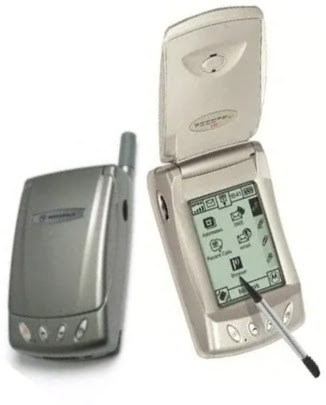
The idea of having a device that can do more than just make and receive phone calls and SMS messages, left me incapable of going back to dumb phones, that is why I was excited when I saw the next phone in the showroom of the great Emmezeta store in Italy; the device was a Motorola, a shiny Accompli 008 (Pic.3). This was a huge leap; it had a futuristic look with a silver body and it really offered the possibility of checking your mail, navigating the web, taking notes, and syncing with a PC, like no other phone did at the time (2002).

Pic.3

From here on, things got only better and more interesting. Sony Ericsson collaboration produced some of the best phones ever to be seen, and one of them was my next purchase, in 2004; the P800 (Pic.4); the first smartphone with a colored display, a camera, a stylus, and the possibility to download and install apps. It was a real pleasure just looking at it.

Pic.4

Another smartphone, which left a huge mark on the industry is the Nokia Communicator 9300i, which I managed to own for a good while in 2005 (Pic.5).

Pic.5

My first experience with Windows Mobile was in 2006, with the Eten Glofiish M700 (with its sliding keyboard and colored screen and its stylus) (Pic.6), then with the HTC HD2 (2009), which had a gorgeous display and eye catching app graphics and animations (Pic.7).

Pic.6

Pic.7

In 2010, I had a chance to use an iPhone 3Gs (Pic.8). To be clear, I did not buy it, I received it as a gift from my brother. It was a new experience, it was the first time I had to deal with new concepts, such as Jailbreaking and installing alternative app stores, it was good for a while, before going back to other phones, such as the HTC EVO 3D (Pic.9), which offered the first experience (at least to me) to watch videos in 3D.

Pic.8

Pic.9

But then came Samsung Note. The first Note I bought was the one with moderate specifications; The Note 3 Neo (Fig.10), and it was perfect in all aspects, it converted me completely to Samsung, I became a loyal Note user, and even though many times, I was buying other phones from Xiaomi, Huawei, or Microsoft, I was always coming back to the Note. In fact, I had the Note 4, Note 5, Note 8, Note 20 Ultra.

Fig.10

iPhone is also a great choice, especially with its last iteration; the iPhone 12 max, but when you get used to the freedom offered to you by Android, it is difficult to accept the limitations of iOS.. But that is a story for another time.


From Fiction to Reality: How Science & Technology Transformed Our Lives

From ancient times to today, science and technology have guided humanity, pulling us out of darkness into light, and from ignorance into kno...